In order to raise the standards of precision in the control of quarantine pests, the Foundation for Fruit Development (FDF) is leading a technical collaboration with Pherobio Technology Co., Ltd. and Anasac for the development of new research tools. The main focus is on optimizing the monitoring of the Lobesia botrana (grapevine cluster moth), as well as Drosophila suzukii, two pests of great importance for the Chilean fruit sector.
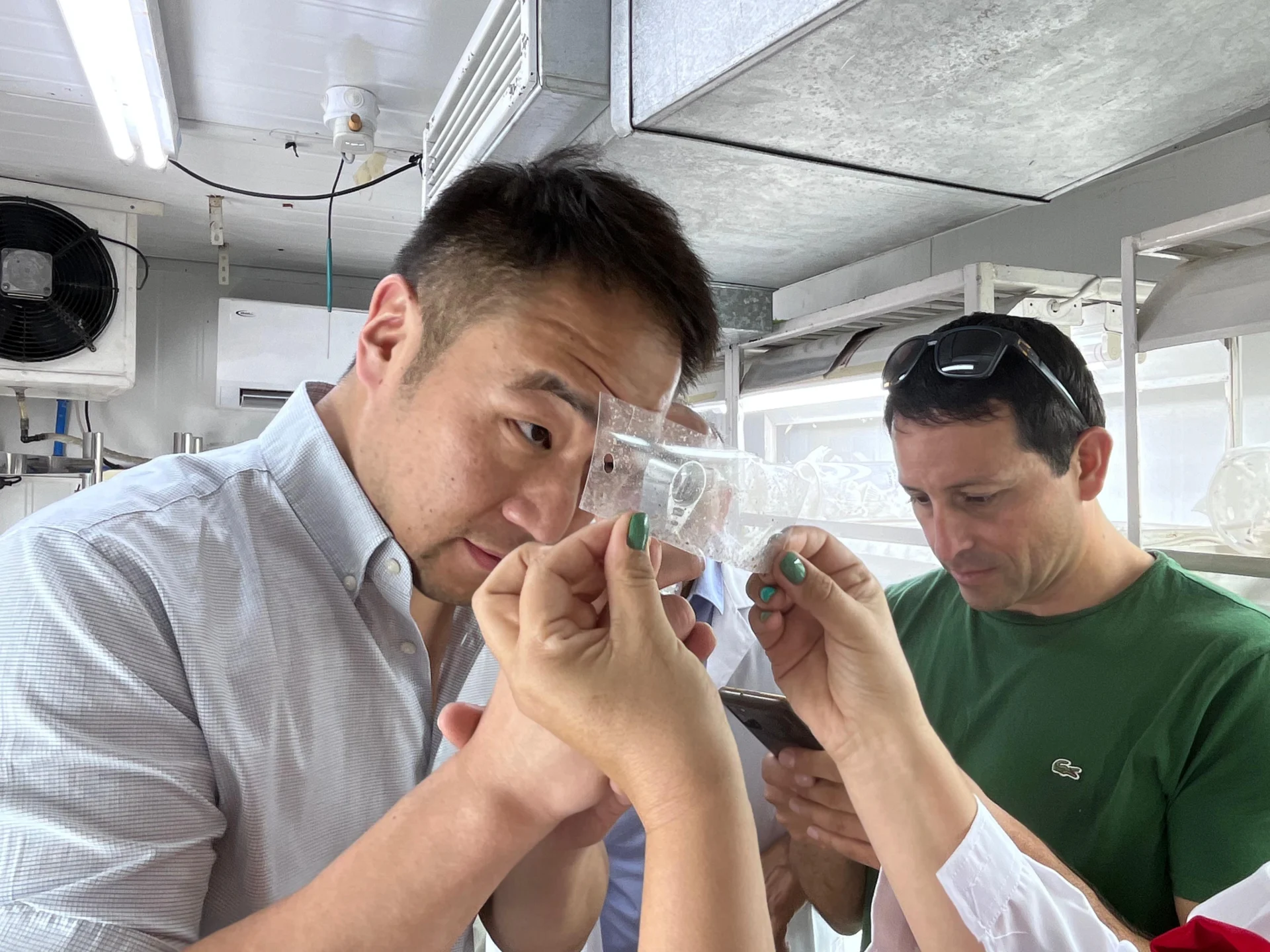
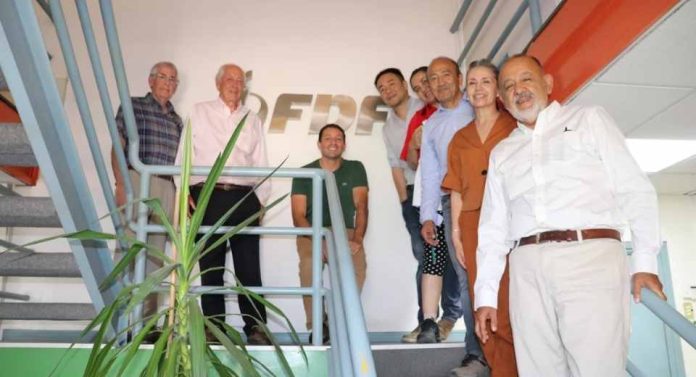
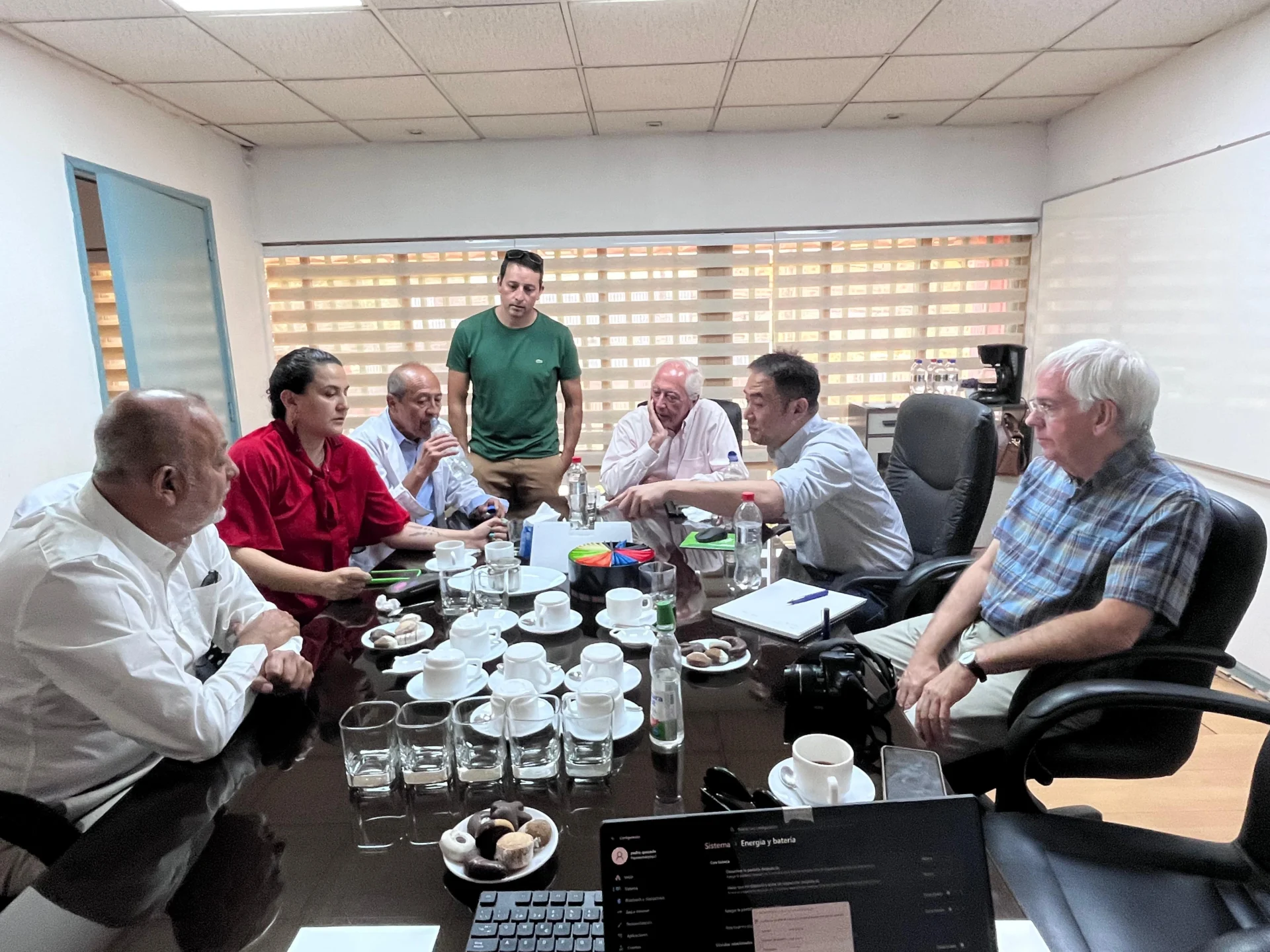
In this context, during the past week FDF executives and researchers received at its headquarters in Quilicura Mo Cui, representative of Pherobio Technology Co., Ltd.; Eduardo Pinto, technical director cluster insecticides of Anasac Chile; Matt Holmes, researcher of Anasac USA and Berioska Madariaga, Product Manager of pheromones in Anasac Chile., In addition to getting to know the different agencies where various projects on pests such as Lobesia botrana and Drosophila suzukii are being carried out, they held a meeting to coordinate future actions.
The visitors were welcomed by Francisco Letelier, president of FDF; Francisco Albornoz, FDF's administration and finance manager; and David Castro, head of FDF's Quarantine Entomology Area, and Susana Izquierdo, agricultural engineer and researcher in the same area.
In this regard, Francisco Letelier, president of FDF said: “With this type of projects FDF reaffirms its commitment to the technological vanguard, encouraging the creation of products that not only have a commercial impact, but also provide definitive applied technical solutions for the phytosanitary protection of Chilean fruit growing”.
What the project consists of
The initiative seeks to go beyond the current technique of sexual confusion, exploring the use of cairomones, food attractants, which emanate chemical signals that attract the female of a species (in the case of this project Lobesia botrana), when she looks for food or host plants for egg laying (oviposition). All this, in order to validate with scientific accuracy the effectiveness of control programs for this pest at the orchard level.
For David Castro, head of FDF's Quarantine Entomology Area, the key to this collaborative work lies in obtaining data that are difficult to visualize in the field today.
«When sexual confusion is implemented, traditional male traps ‘turn off’, which leaves us without a clear metric of what is happening with females and their ability to copulate,» details Castro, adding that, “If we manage to capture females, using specific attractants, we can determine if they are copulating or not. A female without copulation is a sign that the sexual confusion is working perfectly; otherwise, we know that something is going wrong».
Therefore, the development of this “cairomone for Lobesia botrana females” has the support of specialized advisors from the United States and the chemical capacity of Pherobio (a Chinese company with more than 20 years dedicated to the development of biological pest control products and services), which is represented in Chile and Argentina by the Foundation for Fruit Development (FDF), in addition to Anasac in charge of distribution.
According to Castro, this is a «strategic union», since “the companies provide the capacity to synthesize semiochemicals, while FDF provides the biological knowledge and the insects to carry out local efficacy tests”.
Advances in Drosophila suzukii
The project also contemplates solutions for Drosophila suzukii, a pest that currently presents difficulties in monitoring due to the low specificity of existing traps.
«The problem with Drosophila is that current attractants capture many different species, which delays diagnosis. We need a specific attractant that allows us to identify the presence of the pest quickly and efficiently, without the distractions of other species,» said the FDF expert. said the FDF expert.
Therefore, the work with Pherobio and Anasac consists of the development of specific attractants for this pest, where the validation will be done by FDF.
Redacción News Frutas de Chile


 ES
ES EN
EN PT
PT